

It's World Space Week!
Authored by Samantha Liu
A celebration of one of mankind's most extraordinary achievements.
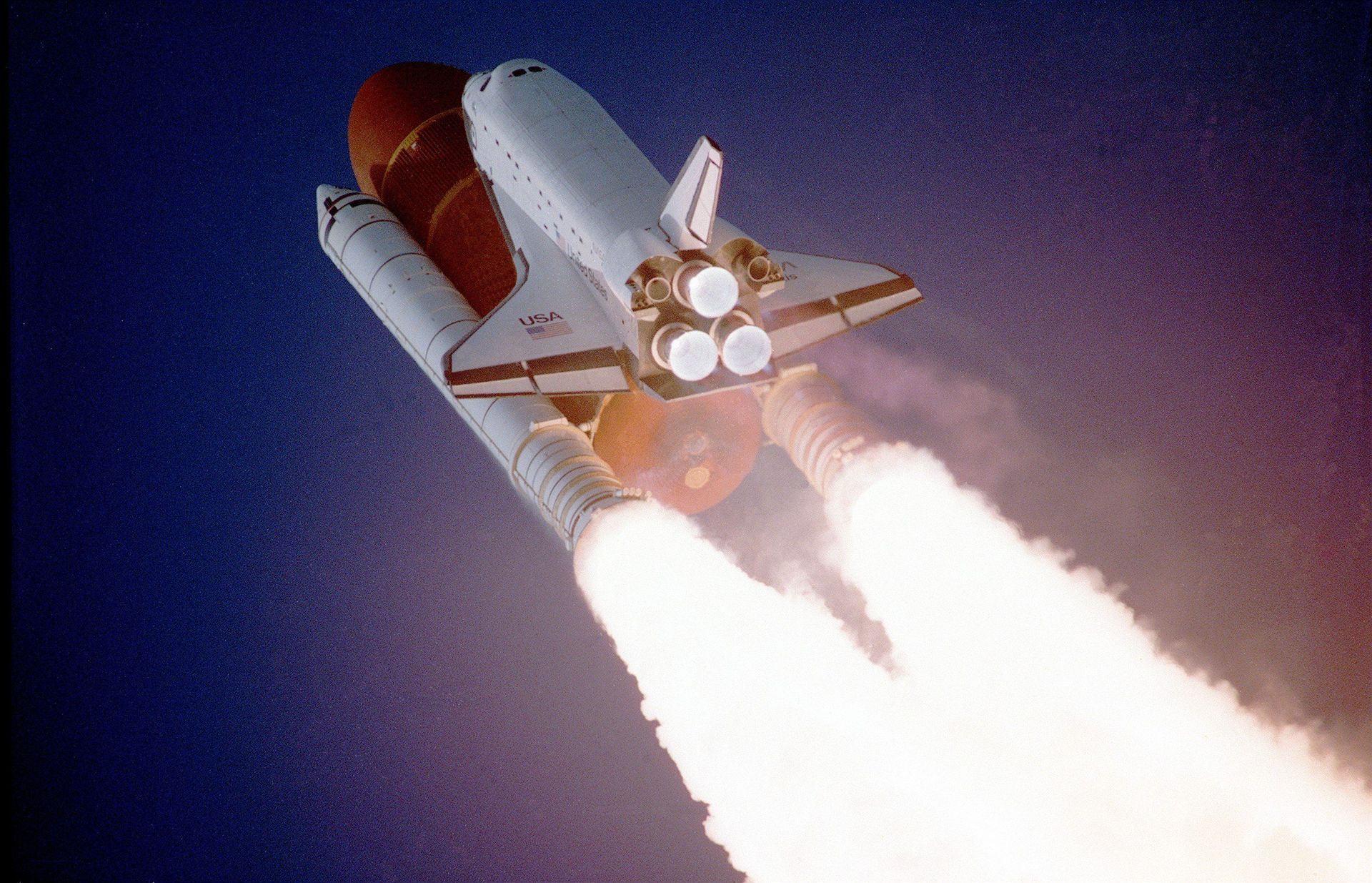
Happy National Space Week! This week, nations all around the globe are coming together to celebrate the beginning and subsequent acceleration in space advancements, which all started not-too-long ago in 1955. To celebrate these massive technological leaps, let's reflect on how far humanity has come since the dawn of the Space Race.
"I am bold enough to say that such a man-made voyage will never occur regardless of all future advances."
- Dr. Lee de Forest, "De Forest Says Space Travel is Impossible," Associated Press, 1957
On February 1957, the Associated Press published a prediction by American inventor Dr. Lee de Forest, widely considered the "Father of the Radio," that the idea of mankind reaching space, and maybe even returning alive, was laughable.
Little would he know....
- On October 4, 1957: just 8 months later, Sputnik 1 would launch into space and become the world's first artificial satellite.
- On November 3, 1957: One month after Sputnik 1, Laika would be the first animal to enter space.
- On April 12, 1961: Yuri Gagarin would become the first human to enter space.
- On December 24, 1968: Apollo 8 became the first manned flight to orbit the moon and return safely.
- On July 20, 1969: And finally, the Apollo 11 mission led to the first humans on the Moon.
Since De Forest's quote, it only took 4 years for the first human to enter space, and an additional 8 more years for the first humans to reach the moon before the end of the decade. These rapid successes almost make it hard to believe that the Wright Brothers flew the first airplane just a mere 54 years prior.
A Technological Revolution
To acknowledge the swiftly changing technological landscape, the United Nations created World Space Week in 1999 to commemorate the signing of the Outer Space Treaty (1967) and the launch of Sputnik 1 (1957). Though occurring a decade apart, both accomplishments occurred during this week in October.
The theme for this year is "Rocket Revolution," and it's easy to see why. Rockets are the backbone of these space feats, and today, breaching space is an activity that is no longer reserved for a relatively small number of national space programs. Now, many countries, organizations, and people have adopted their own space programs organizations, with approximately 300 orbital launches happening in each of the past few years.
What once seemed like an impossible dream has quickly become a global industry. From a single satellite launched by two superpowers to hundreds of launches each year involving governments, private companies, and research organizations around the world, space is becoming more accessible than ever before. What seemed laughable to Dr. de Forest in 1957 is now a routine part of modern technology, communications, research, and exploration.
And perhaps that is the most interesting lesson of the Space Race: technological progress rarely moves at the pace we expect. In just over a decade, humanity went from wondering whether we could reach space to walking on the Moon. As we celebrate World Space Week, it is worth taking a moment to appreciate just how much can change in a remarkably short period of time.
Looking Forward in the Field of Law
As innovation creates new opportunities, it also raises legal questions that require the law to keep up with a changing world.
The Outer Space Treaty was an international first step toward establishing rules for an area of human activity that was rapidly expanding beyond the reach of existing laws. Though several treaties and principles have been established since then, the changing landscape will continue to raise new questions that existing laws may not be prepared to answer. After all, space may have started as a race between nations, but where it takes us next will raise new questions about how our laws apply beyond Earth, and who will be responsible for answering them.
Recent Posts